
On this page
- Why do gutters sag in Portland?
- How is a sag repaired?
- What does pitch have to do with it?
- How do you tell if the fascia is soft?
- When is a sag a sign of replacement?
- How can you prevent sags?
- What does a sag cost to fix?
- What happens if a sag is left?
- Which hangers hold best?
- Are two-storey sags different?
- What should you tell the contractor about a sag?
Why do gutters sag in Portland?
Weight and wet wood. Call
and a contractor can re-hang the run.| Cause | What happens |
|---|---|
| Wet needles, moss and leaves | Weight builds for weeks at a time |
| Old spike-and-ferrule fasteners | Loosen as wood swells and dries |
| Soft fascia | Fasteners have nothing solid to grip |
| Ice | Freezing rain adds heavy load |
| Ladders leaned on the gutter | Bends the front and loosens hangers |
| Too few hangers | Long spans flex between fasteners |
During the February 2021 storm, an inch of ice added about 1,000 pounds to each span of power line, and similar coatings formed on trees, roofs and gutters across the region. Gutters already loose or full of debris were the first to pull away.
How is a sag repaired?
- Clear the gutter to remove the weight.
- Check the fascia behind the sag by probing for soft wood.
- Repair or replace soft boards if needed.
- Remove old spikes or failed hangers.
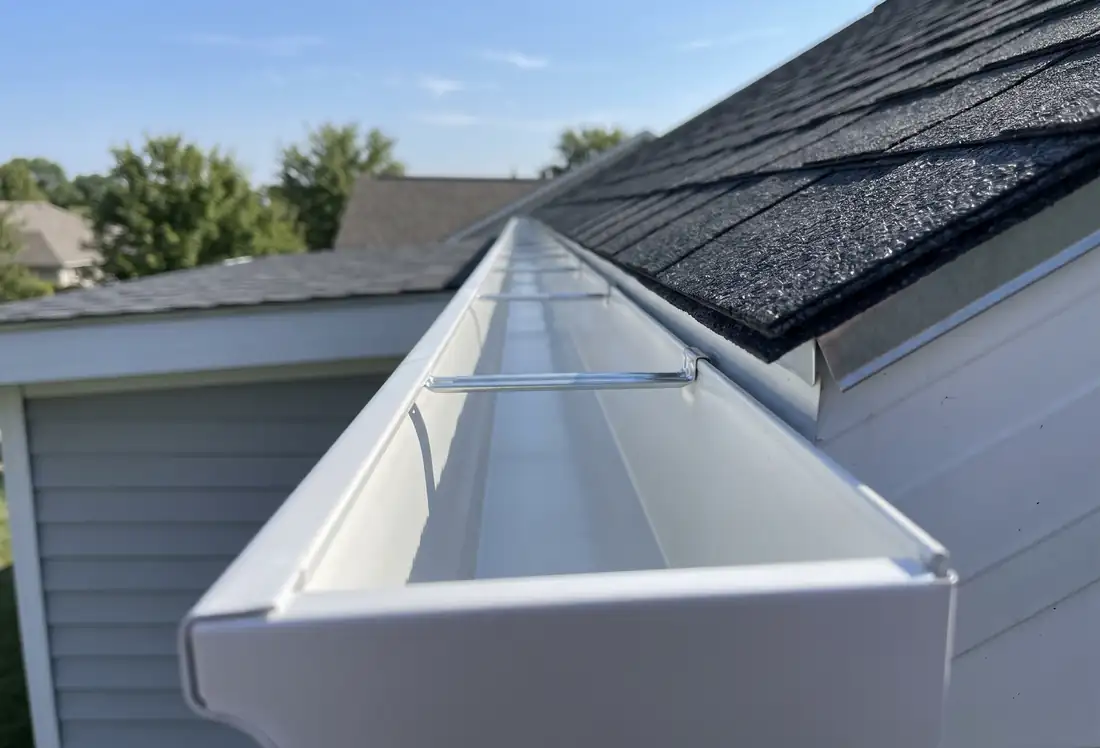
- Fit screw-in hidden hangers into sound wood.
- Restore pitch toward the outlet.
- Water-test to confirm no standing water.
What does pitch have to do with it?
A gutter needs a gentle slope toward each outlet, usually about a quarter inch over 10 feet. A sag creates a low spot where water stands, debris settles and moss can take hold, which adds weight and makes the sag worse. Re-hanging to the right pitch breaks that cycle.
How do you tell if the fascia is soft?
From the ground, look for dark staining, paint peeling along the board behind the gutter, gaps between gutter and fascia, or hangers leaning outward. Up close, a contractor will probe the wood. If the screwdriver sinks in, the board needs replacing before the gutter can hold. See fascia and soffit repair.
When is a sag a sign of replacement?
| Sign | Repair | Replace |
|---|---|---|
| One sag, solid fascia | Re-hang | |
| Sags in several runs | Often | |
| Fascia soft along most eaves | With fascia replacement | |
| Thin, kinked gutter | Replace that run | |
| Sags return after re-hanging | Look at fascia and gutter |
How can you prevent sags?
Keep gutters clean through the wet season, especially under firs; avoid leaning ladders on the gutter; use closely spaced hidden hangers; and check after ice storms. Guards reduce debris weight. See gutter cleaning.
What does a sag cost to fix?
Less than replacement, as long as the fascia is sound. A re-hang is usually priced per run or per visit, with fascia replacement priced per foot on top. Ask for both figures in writing, and ask what the contractor will do if they find more soft wood once the gutter is off.
What happens if a sag is left?
The low spot holds water and debris, which adds weight, which pulls the gutter further from the fascia. Water stands long enough for moss and seedlings to grow in the trough. In winter, the extra water can freeze. Eventually the run pulls free, often in the first heavy rain or freeze of the season. Fixing it in late summer is cheaper and easier than after it falls.
Which hangers hold best?
| Fastener | How it holds | Verdict |
|---|---|---|
| Spike and ferrule | Nail through the gutter face into the fascia | Loosens over time; avoid |
| Strap hanger | Strap nailed to the roof deck | Can tear roofing; hard to replace |
| Hidden hanger with screw | Clips inside the gutter, screwed through the back | Best for most houses |
| Bracket (half-round) | Cradles the round bottom | Standard for half-round |
Are two-storey sags different?
Higher runs are harder and riskier to reach, and wind and ice load them more. Contractors may use more hangers on two-storey runs and check the downspout straps on the same wall, since a sagging gutter often pulls its downspout off-line too.
What should you tell the contractor about a sag?
Which run, how long it is, whether water stands in it after rain, whether the fascia looks dark or soft, and whether trees hang over it. Photos from the ground help.